
he Saar River bends sharply here, and the city wraps itself around that curve like it’s been doing for centuries. Saarbrücken isn’t the kind of place that shouts for attention. It sits right on the French border。and you feel that proximity in everything from the bilingual street signs to the croissants that sell out by 9 a.m. at the bakery near St. Johanner Markt. I spent a long weekend there last autumn, and what struck me first was how unpretentious the whole setup felt—no grand boulevards clogged with tour groups, just a working city that happens to have a serious history and a surprisingly good coffee scene.That history is layered, sometimes uncomfortably so. The Ludwigskirche, a baroque masterpiece, was rebuilt after World War II left it in ruins—and the reconstruction itself is a statement. Walk through the church square and you’ll notice the old stones mixed with newer ones。
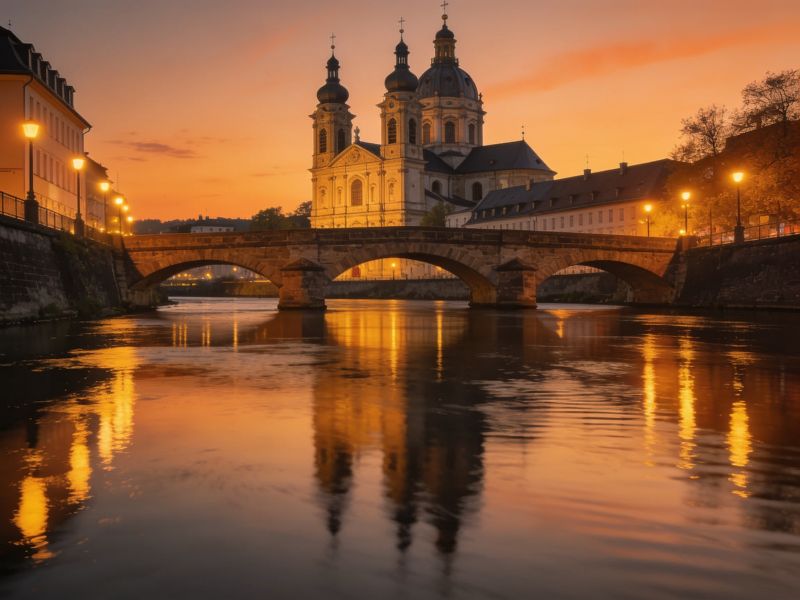
a patchwork that doesn’t try to hide the damage. Saarbrücken changed hands between Germany and France multiple times, and that back-and-forth shaped a local identity that’s more pragmatic than patriotic. People here seem to shrug at national borders;they’ve seen them redrawn before. A taxi driver told me, half-joking, that his grandfather had three different passports without ever moving house. That kind of detail sticks with you.For a city of roughly 180。000, Saarbrücken punches above its weight culturally. The Saarländisches Staatstheater hosts opera and drama that rival much larger cities, and the Moderne Galerie has a collection that surprised me—German Expressionists alongside French Impressionists, a nod to the region’s dual heritage. But the real charm is in the smaller spaces. I stumbled into a tiny record shop near the Nauwieser Viertel, the alternative quarter, where the owner argued with me about Krautrock for twenty minutes. He insisted that Saarbrücken’s isolation during the postwar years actually fostered a weird, self-contained music scene. I’m not entirely convinced, but I bought the record anyway.Food-wise。
the city leans hearty. Saarland is known for its Lyoner sausage and Dibbelabbes, a potato dish that sounds simple but takes hours to get right. I had a version at a neighborhood pub that came with a side of apple sauce and a lecture from the cook about why his grandmother’s recipe is superior to any restaurant version. He wasn’t wrong. The beer culture is solid too—local breweries like Karlsberg are everywhere, and the annual beer festival in summer draws a crowd that’s more local than tourist. It’s not Munich’s Oktoberfest, and nobody there wants it to be.What stays with me about Saarbrücken is its lack of pretense. The city doesn’t curate an image for visitors. It just goes about its business—students cycling through campus。older couples browsing the weekly market, French shoppers crossing the border for cheaper groceries. That everyday rhythm, combined with the baroque architecture and the ever-present river, makes for a place that rewards slow exploration. You won’t find a checklist of must-see sights. You’ll find a city comfortable in its own skin, which is rarer than it should be. If you go, skip the guidebook and just walk along the Saar at dusk. That’s where Saarbrücken makes its case.