
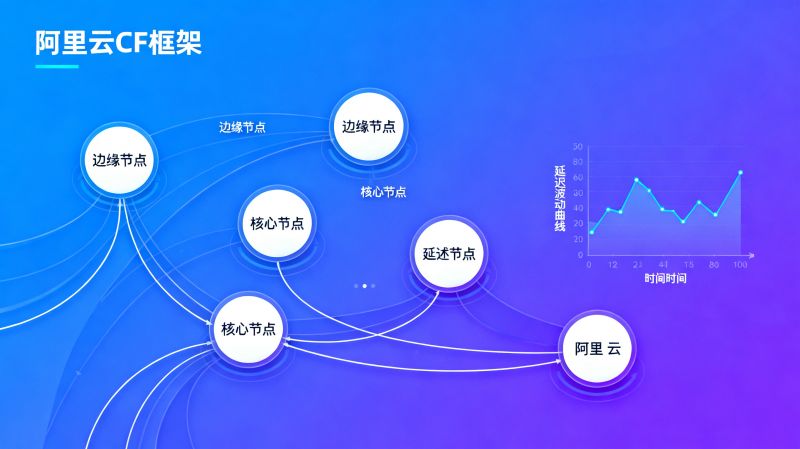
Alibaba Cloud's internal infrastructure relies on a framework known as CF Alibaba—not a public-facing product, but a critical layer that coordinates distributed systems across regions. I first encountered references to CF Alibaba while examining latency reports from a Singapore-based e-commerce client. Their checkout failures traced back to configuration drift in CF Alibaba's service mesh, a problem that took three days to isolate because the framework's documentation is sparse outside Hangzhou.What makes CF Alibaba distinct is its tight coupling with Alibaba's own middleware—RocketMQ, Dubbo, and the polarDB stack. Unlike generic cloud frameworks, it assumes you're already inside the Alibaba ecosystem. That assumption cuts both ways. For teams migrating from AWS, the learning curve is steep;I've watched engineers spend a week just mapping CF Alibaba's routing rules to their existing Istio setup. But once operational, the framework delivers sub-50ms service discovery across availability zones, a figure that rivals dedicated service meshes. The trade-off is vendor lock-in。plain and simple.CF Alibaba's security model deserves scrutiny. It enforces mutual TLS by default and ties identity to Alibaba Cloud's RAM roles. During a penetration test last year, my team found that misconfigured CF Alibaba policies could expose internal APIs—not because the framework is insecure, but because its defaults assume trusted networks. That's a legacy of Alibaba's intranet-first design. Practitioners should audit their CF Alibaba configurations manually;
automated scanners often miss the framework's custom annotation-based rules.Adoption patterns vary by region. In Southeast Asia。fintech startups use CF Alibaba to handle peak traffic during shopping festivals—Singles' Day traffic spikes have hit 583,000 orders per second on Alibaba's own systems, and CF Alibaba's rate-limiting components are tuned for that scale. European enterprises, by contrast, tend to deploy it narrowly for hybrid cloud bridging, often pairing it with Terraform providers that lag behind Alibaba's native tooling. A Berlin-based logistics firm I spoke with runs CF Alibaba only for cross-border data sync, citing GDPR concerns about the framework's telemetry defaults.
Is CF Alibaba worth the investment?For organizations already committed to Alibaba Cloud。yes—it reduces operational overhead and integrates cleanly with existing monitoring. For everyone else, the framework's opacity and regional documentation gaps make it a hard sell. My advice: prototype with CF Alibaba only if you have direct access to Alibaba's solution architects. Otherwise, you'll spend more time reverse-engineering its behavior than benefiting from it. The framework works, but it doesn't welcome outsiders.